
What It Really Costs to Own a Home in Incline Village (2026)
Lake Tahoe Cole Mizak September 3, 2026
Lake Tahoe Cole Mizak September 3, 2026
By Cole Mizak, Compass | #1 agent by individual sales volume in Incline Village, 2025
TL;DR: The purchase price is only the beginning of what it costs to own in Incline Village. The recurring costs that matter most are property taxes (surprisingly low, thanks to Nevada), IVGID facility fees (about $1,530 a year for most parcels in fiscal 2026-27), home insurance (the fastest-rising cost in the Tahoe basin), and — if you plan to rent — short-term rental permitting and a 13% lodging tax. Add utilities, any HOA dues, and alpine-climate maintenance, and you have the real carrying cost. The good news for most buyers: Nevada's low property taxes and zero state income tax often make the all-in cost of owning here lower than a comparable home in California, even after the Tahoe-specific extras.
Figures reflect the 2026 / fiscal year 2026-27 period, are set annually, and change. This is general information, not tax, legal, or insurance advice. Verify current numbers for any specific property.
Most buyers focus on price and mortgage and stop there. In Incline Village, that leaves out several costs that are specific to the Nevada shore — some pleasantly low, some rising fast, and a few that catch people entirely by surprise at the closing table. Understanding all of them up front is the difference between a budget that holds and one that doesn't.
Here's the full picture, line by line, with current 2026 numbers.
This is where Incline Village pleasantly surprises most buyers coming from California. Nevada taxes property on 35% of assessed value, and the effective rate for a primary residence generally lands in the range of roughly 0.5% to 0.75% of market value — meaningfully lower than California, Texas, and most feeder states.
Two features make it even better. First, Nevada's statewide combined rate is capped at $3.64 per $100 of assessed value. Second — and this is the one people miss — a partial abatement caps how much your tax bill can rise each year: 3% for a primary residence and up to 8% for a non-primary/second home. Over time, that cap keeps your taxable basis lagging well behind rising market value.
The costly mistake to avoid: if you don't file the Partial Abatement Claim Form declaring the home your primary residence, you can be billed at the higher 8% cap. Title companies usually file it at closing, but not always. Check your first tax bill — if it shows the high cap, file the claim with the Washoe County Assessor immediately.
For comparison, a California buyer under Prop 13 typically pays around 1.1% to 1.25% of purchase price from day one, locked to the price they paid. Nevada's lower rate on a capped, lagging basis is a real and recurring advantage.
Every parcel within the Incline Village General Improvement District pays an annual facility fee that appears as a line item on your Washoe County property tax bill. For fiscal year 2026-27, the board set the Recreation Facility Fee at $1,385 and the Beach Facility Fee at $145 — a combined $1,530 for most parcels with full privileges.
That fee is what unlocks the Incline lifestyle: IVGID picture passes and recreation punch cards granting access to the private beaches, the recreation center, and resident pricing at the two championship golf courses and Diamond Peak ski resort. The board sets the amounts each May, and they vary year to year — sometimes significantly — so treat any figure as a current-year snapshot, not a fixed cost.
An important nuance: not every parcel carries beach privileges. Because of a historical boundary, some homes get recreation access without beach entry. Two houses on adjacent streets can sit on different sides of that line, and it affects both lifestyle and value — always verify what a specific property actually conveys before you buy.
If there's one carrying cost that has changed dramatically in recent years, it's insurance. The entire Tahoe basin sits in a wildland-urban interface, and insurers have responded with higher premiums, stricter requirements, and in some cases non-renewals — particularly for higher-value homes. This is the line item most likely to surprise a buyer, and the one most worth investigating early.
Two practical points. First, get insurance quotes during your escrow period, not after — availability and cost vary enormously by property, and you want no surprises. Second, insurability increasingly depends on wildfire mitigation: maintaining defensible space, using fire-resistant materials, and meeting hardening standards can be the difference between a reasonable premium, an expensive one, and no standard coverage at all. A home that's already been mitigated is worth more and cheaper to insure.
Many buyers assume they can offset costs by renting when they're away. You may be able to — but Incline Village and Crystal Bay have specific, tightening rules, and the economics deserve a close look before you count on rental income.
Incline Village and Crystal Bay fall under Washoe County's short-term rental ordinance. A county permit is required before you advertise or rent for fewer than 28 days, and the key facts for 2026 are:
Just as important is the regulatory trajectory: full-time residents have pushed hard for tighter rules, and the county has steadily added restrictions. Rental rules here should be treated as a moving target, not a permanent feature — build your budget so it works even if rental income tightens.
Whether you pay HOA dues depends entirely on the property. Many single-family homes in Incline Village have no HOA or only modest dues. Condominiums and the gated lakefront and marina communities, by contrast, can carry substantial monthly dues that cover amenities, insurance, and reserves. When evaluating a condo especially, scrutinize the HOA's financial health and reserve funding — an underfunded association can mean special assessments down the road.
IVGID also functions as your utility provider for water, sewer, and trash, billed separately from the recreation fee. Beyond that, budget for electricity and heating; mountain homes work hard in winter, and heating a large home through a Tahoe winter is not trivial. Propane, natural gas, or electric heating costs vary widely by home size, construction, and system, so ask for a seller's utility history when you can.
Owning at 6,200-plus feet on the shore of an alpine lake carries maintenance costs a lowland home doesn't. Plan for snow removal through the winter, roof and gutter upkeep under heavy snow load, and ongoing defensible-space maintenance around the property. If the home hasn't been certified for TRPA Best Management Practices (BMPs) — the erosion and runoff controls required on Tahoe parcels — factor in a one-time retrofit and certification as well. These are manageable costs, but they're real and recurring, and they're part of responsible ownership on the lake.
Put together, the Tahoe-specific costs — IVGID fees, insurance, mitigation, alpine maintenance — are real. But they sit alongside two powerful advantages that frequently make the all-in cost of ownership here lower than a comparable home in California: Nevada's low, capped property taxes, and the complete absence of state income tax on wages, retirement income, and capital gains. For many buyers relocating from a high-tax state, what they save on income and property taxes each year more than covers Incline's carrying costs — with the lifestyle included.
The takeaway for budgeting is simple: don't stop at price and mortgage. Model the full annual carrying cost — taxes, IVGID, insurance, utilities, HOA, and maintenance — against the tax savings, and you'll have an honest picture of what ownership here actually costs you.
What are the annual costs of owning a home in Incline Village? Beyond mortgage and price, budget for property taxes (roughly 0.5%–0.75% of market value, capped annually), IVGID facility fees (about $1,530 for most parcels in fiscal 2026-27), home and wildfire insurance (rising and property-specific), utilities, any HOA dues, and alpine-climate maintenance like snow removal and defensible space.
How much are IVGID fees in Incline Village? For fiscal year 2026-27, IVGID set a $1,385 Recreation Facility Fee and a $145 Beach Facility Fee — about $1,530 combined for most parcels with full privileges. The fee is set annually and appears on your Washoe County property tax bill; it funds beach, golf, ski, and recreation-center access.
Are property taxes high in Incline Village? No — they're comparatively low. Nevada taxes 35% of assessed value at an effective rate generally around 0.5%–0.75% of market value, with annual increases capped at 3% for primary residences. Combined with no state income tax, the tax picture is a major draw for buyers from higher-tax states.
Can I short-term rent my Incline Village home? Possibly, but it's regulated. Washoe County requires a permit for rentals under 28 days, charges a 13% lodging tax, ties occupancy to parking and other constraints, and requires inspections. Permits don't transfer at sale, and rules have been tightening — verify current requirements before relying on rental income.
Is home insurance hard to get in Incline Village? It has become more challenging and more expensive across the Tahoe basin due to wildfire risk, with some non-renewals for higher-value homes. Insurability increasingly depends on wildfire mitigation and defensible space. Get quotes during escrow rather than after.
I'm Cole Mizak, a Compass luxury agent and the #1 agent by individual sales volume in Incline Village for 2025, with more than $275 million in career sales. Every property here carries a different set of costs — IVGID privileges, insurance profile, rental eligibility, and tax basis all vary parcel by parcel. Before you make an offer, it's worth knowing the true all-in number.
If you're considering a home in Incline Village or Crystal Bay, I'll put together a personalized cost-of-ownership breakdown for the specific property — and connect you with the local insurance and cross-border tax professionals who handle the details. Reach out at mtnluxuryliving.com. You may also want to read my Incline Village market report and my guide to moving here from the Bay Area.
Reminder: Figures reflect the 2026 / fiscal year 2026-27 period and are set annually. This article is general information, not tax, legal, or insurance advice. Confirm current fees, tax treatment, insurance costs, and rental rules for any specific property before relying on them.
Stay up to date on the latest real estate trends.

Lake Tahoe
October 7, 2026
Closed sales, Incline Village only, one agent: $68M+ year to date as of 10/07/2026 from MLS data.
Lake Tahoe
October 6, 2026
The June 4, 1968 boundary rule, 2026-27 IVGID fees, and how to verify a property before you write an offer.
Lake Tahoe
September 30, 2026
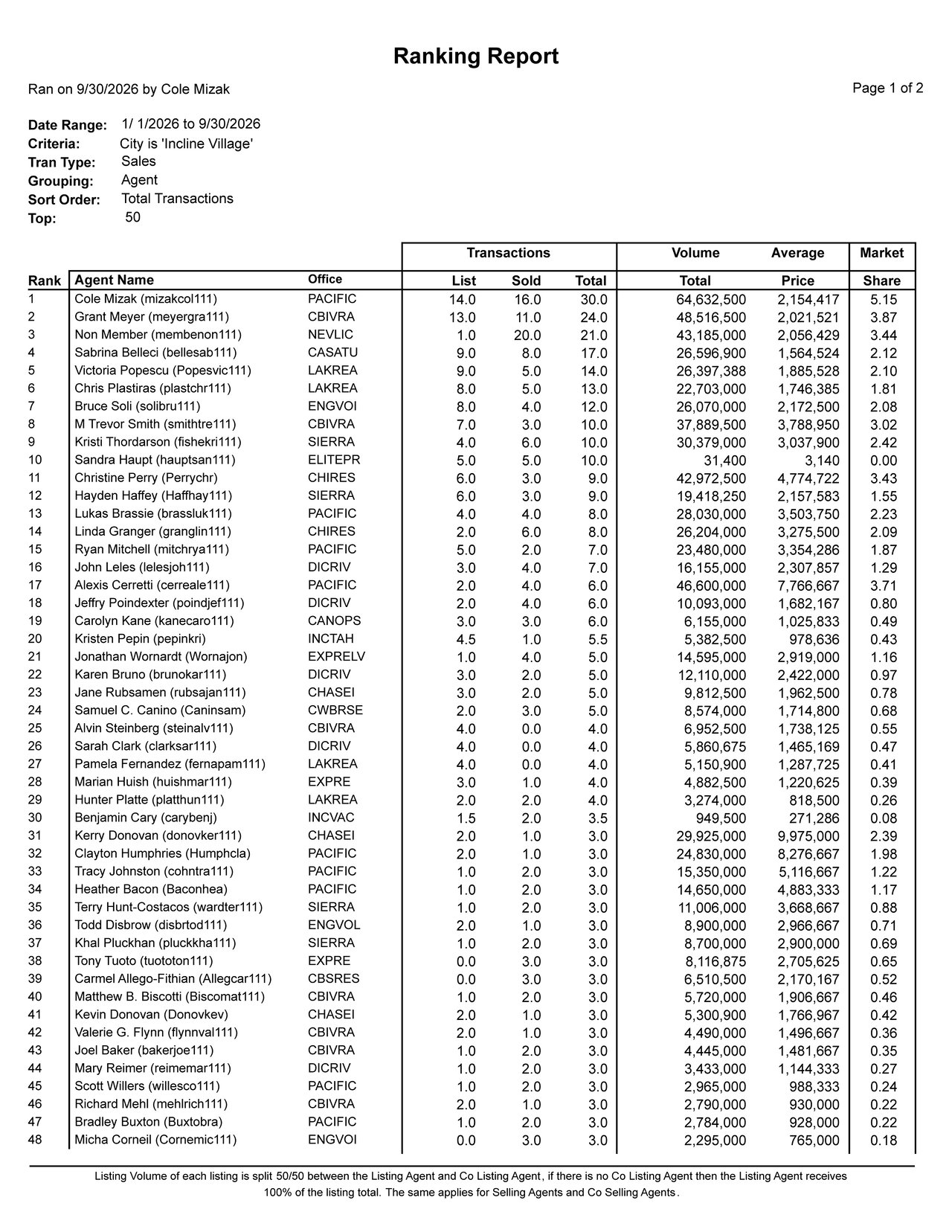
The official IVR MLS rankings are in — who leads Incline Village through three quarters, and what the data means for buyers and sellers.
Lake Tahoe
September 18, 2026
Effective October 15, 2026 — but the statewide average hides who really pays. Here's what it means on each side of the lake.

Lake Tahoe
September 17, 2026
Where you live when you sell can be worth millions — but an IPO windfall isn't taxed the way most people think. Here's what a move can and can't do.
Lake Tahoe
September 15, 2026
Incline's most walkable, family-friendly single-family neighborhood — and its top spot for teardown-and-rebuild.

Lake Tahoe
September 8, 2026
Trophy estates from $10M to a $125M record — and why, on this street, value is measured in feet of frontage, not square feet.
Lake Tahoe
September 3, 2026
Property taxes, IVGID fees, insurance, and rental rules — the full annual carrying cost, and why it often nets out in your favor.
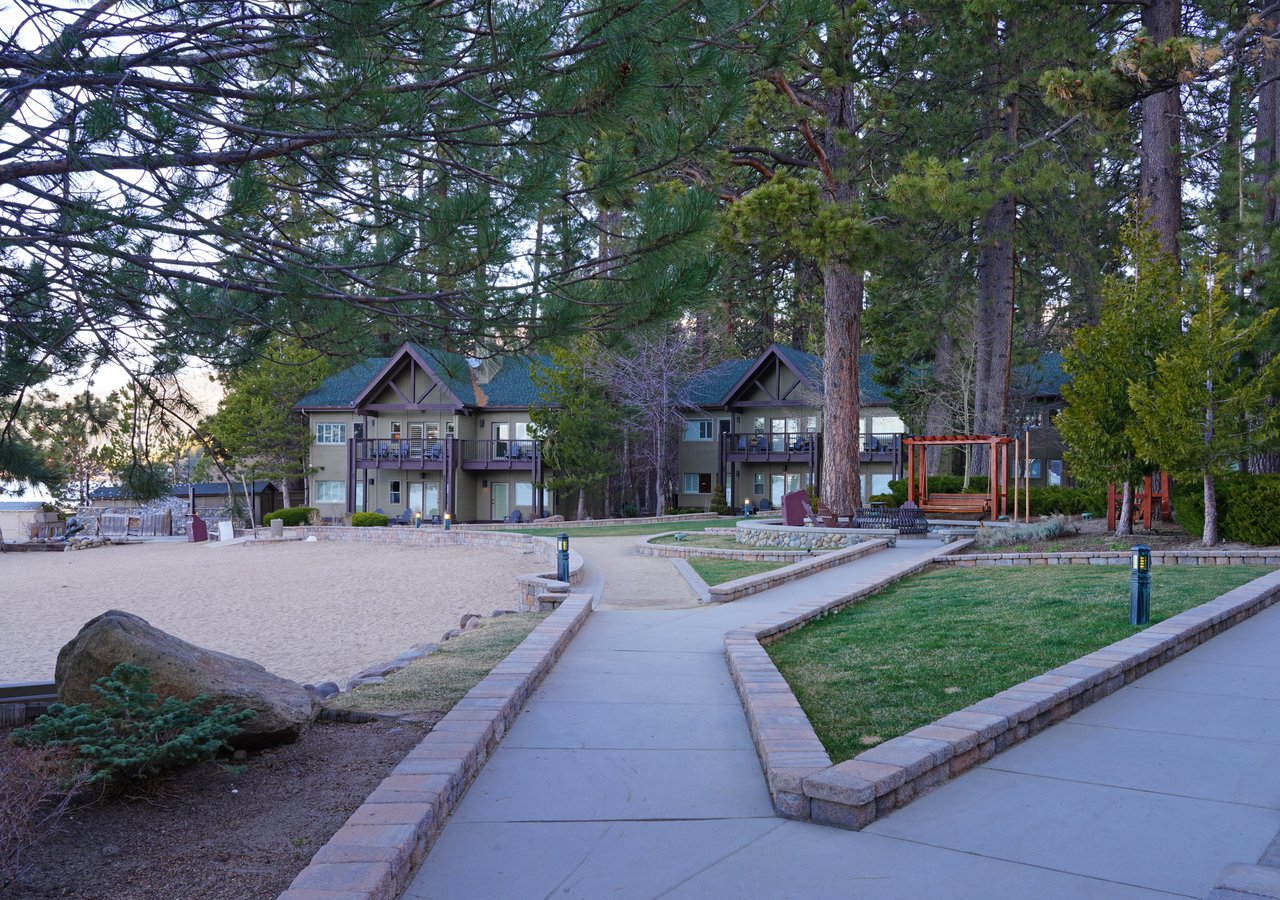
Lake Tahoe
August 31, 2026
How Much Is My Incline Village Home Worth? (2026)
Cole’s mission is to elevate the real estate experience for his clients. He is a long-time Lake Tahoe local and luxury home expert who has developed innovative strategies to provide his clients with an unmatched, bespoke level of service, attention, and support.